

Bad conversion data is expensive. For medical practices, it can also create privacy risk.
You can track ad performance without exposing patient details, but only if medical conversion tracking is built around generic events, first-party controls, and server-side filtering. This is marketing and compliance best-practice content, not legal advice. Start with the data path, because the setup matters more than the ad account.
Why default Google Ads tracking can leak PHI
Most ad tracking was built for retail. A shoe store can pass product names, order values, and email matches. A medical practice can’t.
In healthcare, PHI can slip out through form fields, page URLs, query strings, scheduler details, call recordings, and even thank-you pages. If Google Ads, Google Analytics, or another non-compliant ad tool receives data tied to a person’s care request, symptoms, or condition, the risk rises fast.
That risk doesn’t disappear because a page is public. In 2026, privacy-focused measurement means collecting data first-party, then filtering it on your server before any ad platform sees it. That matches the direction described in HIPAA-safe analytics guidance for 2026.
A server-side setup helps because it lets you rename events, strip parameters, and block unsafe payloads before they leave your domain. Instead of sending a messy stream of user data, you send a simple signal like “appointment_request_complete.”
Consent matters too, but it has limits. A consent banner may control cookies and ad storage. It does not make PHI sharing acceptable. So tags should wait for consent where required, and health-related details should never go out at all.
Treat Google Ads like a scoreboard. It should receive that a conversion happened, not why the patient came in.
If your current setup sends page titles, free-text form entries, or call transcripts to third parties, pause and audit it before spending another dollar.
Compliant conversion events you can track safely
Safe event design is boring on purpose. That’s a good thing. You want generic labels, counts, and timestamps, not rich patient data.

This quick comparison shows where the line is.
| Safe event | Okay to send | Never send |
|---|---|---|
| Button click | call_button_click | symptom text, condition-specific URL |
| Generic lead form submit | lead_form_submitted | name, email, insurance, visit reason |
| Connected phone call | call connected, duration bucket | recording, transcript, caller notes |
| Appointment request complete | appointment_request_complete | diagnosis, procedure, specialty details |
| Offline conversion import | GCLID or internal de-identified ID, conversion flag | EHR data, treatment info, patient identity |
The rule is simple. Send event names and conversion status. Keep all patient details inside HIPAA-compliant systems.
That means you can safely track common actions such as a call button click, a generic contact form submission, a phone call connection event, or an appointment request completion, as long as the event contains no health details. Offline conversion imports can also work well when you store the click ID, map it to an internal record, and later upload only a de-identified conversion outcome.
Watch the URL structure too. A neutral page like /request-received is safer than a page name that reveals a specialty, symptom, or procedure. Better yet, fire the event server-side after the form lands.
Enhanced Conversions need extra care. In healthcare, the default setup can be too loose because it may capture emails or phone numbers from forms tied to health-related pages. If you use it at all, keep it limited to non-PHI flows, hash data first-party on your server, and get compliance review before launch. Many practices skip it and rely on safer event design plus offline imports.
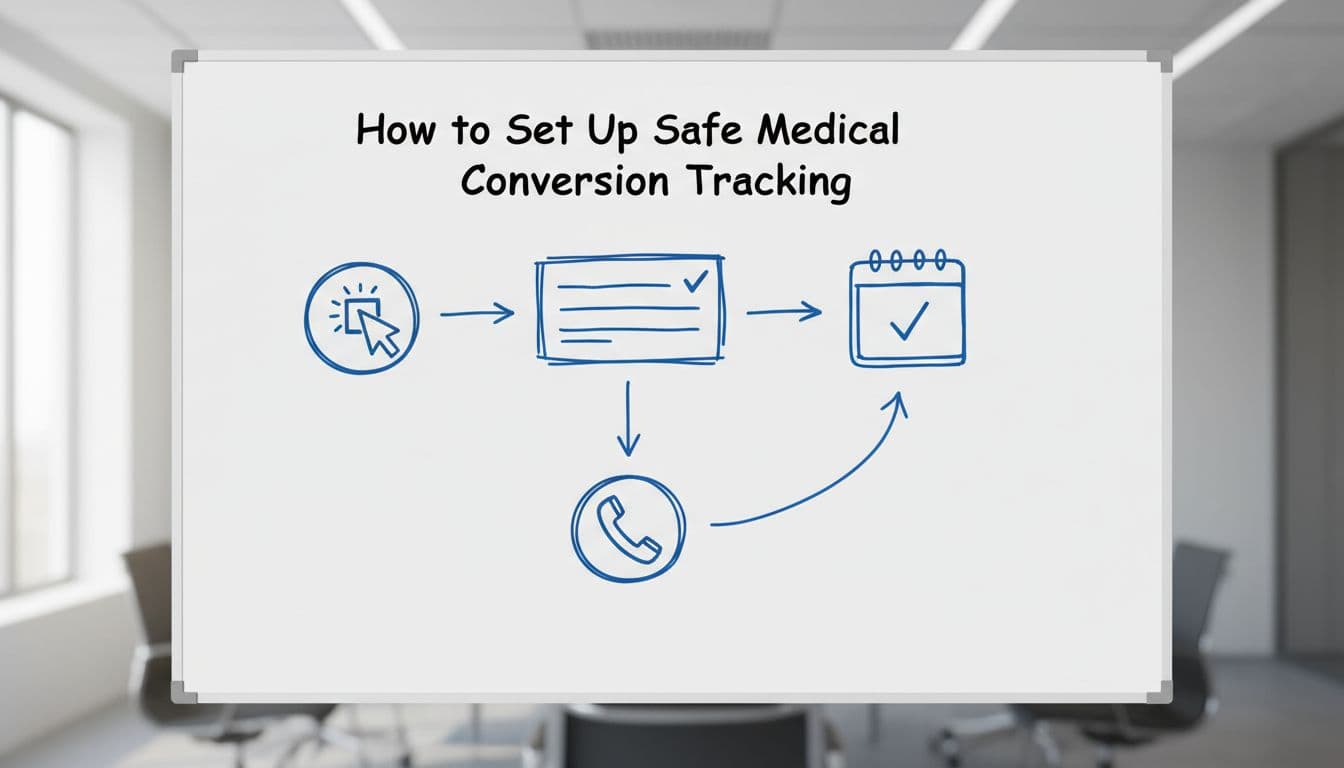
How to set up safe medical conversion tracking in 2026
A clean setup usually has four parts:
- Capture click IDs first-party so your site or server can tie ad clicks to later actions.
- Filter data before export and keep only generic event names, timestamps, and the click ID.
- Store lead details internally inside systems built for healthcare workflows, not inside ad tools.
- Import offline conversions later with the GCLID or a de-identified internal ID, never with diagnosis or treatment data.
Testing matters as much as setup. Use fake submissions, inspect network requests, review hidden fields, and check every call-tracking payload. Then repeat the audit after site updates, form changes, or scheduler swaps.
For calls, use a vendor that will sign a BAA and let you report connection events without pushing recordings to ad platforms. For forms and schedulers, block free-text reason fields, procedure choices, provider names, and specialty labels from every marketing tag.
If you’re comparing an SEO agency Hartford businesses know, reviewing Hartford SEO services, vetting an SEO company Hartford CT owners trust, or searching for a local seo agency near me, ask one hard question first: can they prove lead quality without exporting patient data? Strong paid measurement and technical SEO audit and fixes should support each other. For a broader look at attribution options, this healthcare conversion tracking guide offers helpful examples.
Privacy-safe tracking doesn’t mean flying blind. It means measuring the action while keeping the patient out of the payload.
Start with one campaign, one generic conversion, and one full audit of every tag, form, URL, and call flow. When medical conversion tracking is clean, budget decisions get clearer and compliance risk gets smaller.
